 blog
Daycare Safety Questions for Parents: A 2026 Guide
Table of Contents
- Why Asking the Right Daycare Safety Questions Matters
- Questions to Ask Daycare Providers About Licensing and Compliance
- Staffing, Training, and Background Checks: Essential Questions
- Daycare Emergency Procedures and Evacuation Plans
- Daycare Illness and Medication Policies: What Parents Need to Know
- Creating Your Daycare Tour Checklist for Safety Inspection
- Red Flags and Follow-Up Questions During Your Visit
- Frequently Asked Questions
Last Updated: October 19, 2026
Why Asking the Right Daycare Safety Questions Matters
Asking the right daycare safety questions isn't about being paranoid, it's about being informed. Transparent, confident providers welcome these conversations.
At Childcare Etc Irvine, we aim to provide a nurturing environment for children and support families seeking childcare solutions.
This guide covers the daycare safety questions to ask about licensing, staffing, emergency procedures, and health policies, plus what to observe during your tour.
Questions to Ask Daycare Providers About Licensing and Compliance
Start with the basics: Is this daycare licensed, and what does that license cover? Don't stop at asking, verify.
Ask these specific questions during the tour:
- Is your daycare licensed by the state? Ask to see the current license and note the license number, type, and expiration date.
- Which agency licenses you, and how often does that agency inspect? Request the most recent inspection reports.
- Have there been any violations or complaints filed? Ask for details on how each was resolved and what changed afterward.
- How do you stay current with changing regulations?
Many parents skip verification, assuming a facility must be licensed. But not all childcare is regulated equally.
How to verify licensing and inspection records yourself
Most states publish child care licensing records through a searchable online portal, often run by the Department of Health and Human Services, Department of Children and Families, or Department of Early Learning. Search by provider name, address, or license number to find:
- License status (active, probationary, suspended, revoked)
- License type and capacity (how many children the provider may serve)
- Inspection dates and results
- Cited violations and the corrective action plan
Read reports like a parent, not a lawyer.
Ask the provider directly: "Can you walk me through your most recent inspection report?" Then compare what they say to the public record.
Questions that reveal how compliance is maintained day to day
A license is a snapshot; compliance is ongoing. Ask:
- Who is responsible for keeping records current, and how often are they reviewed?
- How do you document staff training hours and background check renewals?
- What happens when an inspector arrives unannounced, who handles the visit?
- How are parents notified if the facility is cited for a safety issue?
Request copies of inspection reports and keep them with your tour notes. What matters is how a facility responds to findings, and whether the public record matches what they tell you.
Staffing, Training, and Background Checks: Essential Questions
The people caring for your child matter most, their qualifications, training, and backgrounds directly impact safety.
Ask about staff credentials:
- What training do all staff members complete? Look for child CPR and first aid certification.
- How often is training updated? Annual refresher courses are standard.
- What background checks are required? Criminal history, sex offender registry, and child abuse registry checks should be mandatory.
- How long has your lead teacher worked here? Continuity matters for your child's development.
Background checks aren't one-time events, reputable providers run them before hiring and verify them regularly against state and federal databases.
Training goes beyond initial certification, ask what ongoing professional development staff receive in child development, safety protocols, and recognizing health concerns.
Staff-to-child ratios matter enormously, more hands mean better supervision and faster emergency response. Ask:
- What's your staff-to-child ratio for each age group?
- Do you maintain ratios during transitions and meals?
- How do you handle absences to maintain ratios?
State regulations set minimum ratios, but some facilities maintain lower ratios than required, a positive sign.
Daycare Emergency Procedures and Evacuation Plans
Emergencies happen, fire, weather, medical situations, and your child's safety depends on clear procedures and regular practice.
Ask about emergency preparedness:
- How often do you conduct fire drills? Monthly drills are standard.
- Do you practice other emergency scenarios? Lockdowns, weather events, and medical emergencies should all be practiced.
- Where do children go during an evacuation? Ask to see the assembly area.
- How do parents get notified during an emergency? What's the communication protocol?
Request copies of emergency procedures, they should be written, detailed, and accessible, and staff should explain them without hesitation.
Ask about specific scenarios:
- What happens if a child has a severe allergic reaction?
- How do you handle a child who goes missing during outdoor play?
- What's your protocol for a child who becomes ill during the day?
- Do you have access to an AED (automated external defibrillator)?
Ask when the last drill was conducted and request documentation, staff should know procedures by heart, not by reading a manual.
Daycare Illness and Medication Policies: What Parents Need to Know
Illness spreads quickly in group settings, clear policies protect your child and others.
Ask about health and illness policies:
- When should I keep my child home? Ask for specific symptoms (fever, rash, cough, diarrhea).
- How long before a child can return after illness?
- What happens if my child gets sick during the day?
- How do you prevent the spread of contagious illness?
Medication administration requires careful protocols. Ask:
- How do you store medications? (Locked, refrigerated if needed, labeled clearly)
- Who administers medications? (Trained staff only)
- How do you track medication administration? (Written logs)
- What's your process if a dose is missed or a child refuses medication?
- Do you require written permission for over-the-counter medications?
Handwashing and sanitation prevent many illnesses. Ask:
- When do staff wash hands? (Before food prep, after diaper changes, after outdoor play)
- How often are toys and surfaces sanitized?
- What cleaning products do you use? (Child-safe, non-toxic options)
- How do you handle diaper changing to prevent contamination?
Food allergies require special attention. Ask:
- How do you prevent cross-contamination with allergens?
- Do you have separate serving utensils and plates for allergic children?
- What's your protocol if a child has an allergic reaction?
- Can I provide allergy-safe snacks?
Creating Your Daycare Tour Checklist for Safety Inspection
The tour is your chance to observe the facility in action.
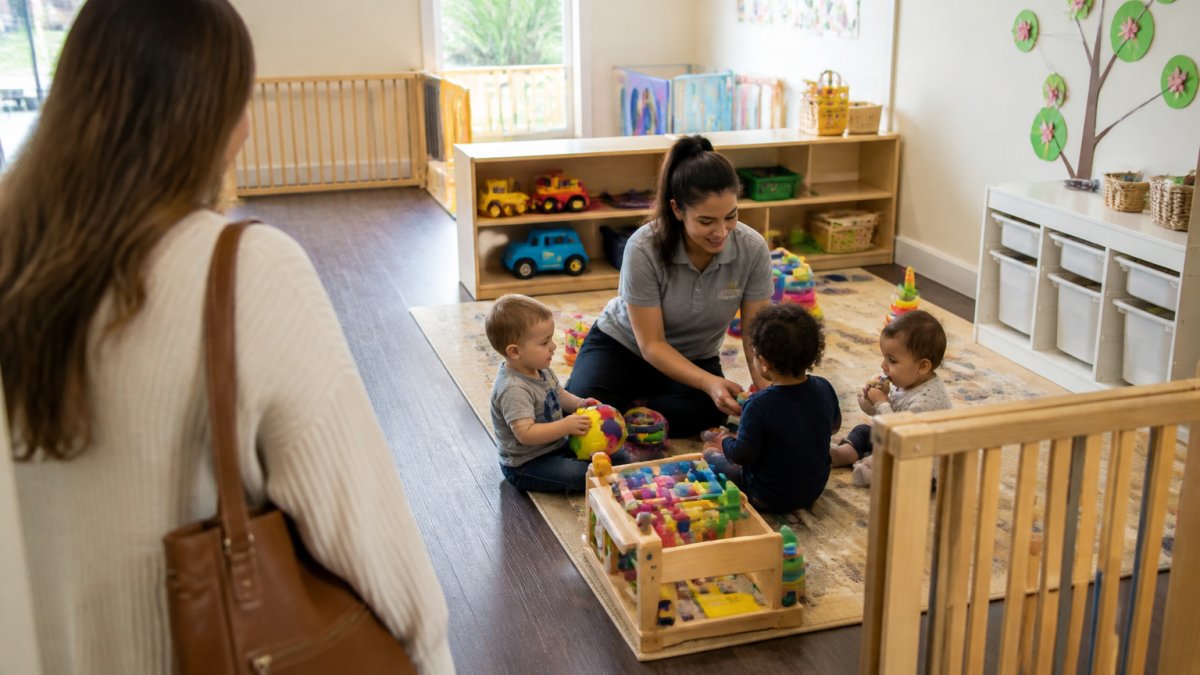
Entrance and Exits
- Is there a secure entrance? Watch whether the door is locked and whether staff buzz in or check IDs before admitting anyone.
- Is there a visitor sign-in procedure? Note whether every adult is logged and badged.
- Are exits clearly marked and unobstructed? Look for blocked doors or stored items in pathways.
- Can unauthorized people easily walk in behind a parent? Observe the entry sequence for five minutes.
Indoor Environment
- Are electrical outlets covered in rooms used by infants and toddlers?
- Are cleaning supplies and medications locked away, and out of reach on high shelves?
- Are windows and railings secure, with guards on upper-floor windows?
- Is the space clean and well-lit? Check corners, under tables, and diaper areas.
- Are toys age-appropriate and in good condition? Look for broken pieces or small parts in rooms for children under three.
Outdoor Space
- Is the playground fenced and secure, with a self-latching gate?
- Are surfaces soft (mulch, rubber mats) under equipment, and deep enough to cushion a fall?
- Is equipment appropriate for the ages served? Note whether separate areas exist for toddlers and older children.
- Is there shade available, and is water accessible?
- Are there hazards like standing water, broken equipment, or peeling paint?
Staff Interaction
- Do staff engage with children or mostly supervise passively? Watch for at least ten minutes without interrupting.
- How do staff respond to crying or conflict? Note whether comfort is offered and how quickly.
- Is discipline age-appropriate and positive? Listen for tone and language.
- Do staff seem calm and attentive, or distracted by phones and side conversations?
- Are staff positioned to see the whole room, including blind spots?
Sleeping Areas (Infants and Toddlers)
- Are cribs and cots safe and clean, with tight-fitting sheets and no loose bedding?
- Is there a clear sleep schedule, and are infants placed on their backs?
- How do staff monitor sleeping children? Ask whether checks are documented and how often.
- Are blankets and pillows absent for infants, per safe sleep guidance (Safe Sleep Environment)?
Food and Nutrition
- Are meals nutritious and age-appropriate, with posted menus?
- How are bottles and food prepared, and are they labeled with each child's name?
- Are allergen warnings posted, and are serving utensils kept separate for allergic children?
Age-specific prompts to add to your notes
For infant rooms: ask how often staff check sleeping infants, whether pacifiers are used, and how bottles are stored and warmed.
Take notes during your tour, with permission, and ask to see areas beyond the main playroom.
How to use your checklist to compare providers
Score each item as "observed," "not observed," or "unclear," then compare providers side by side.
Red Flags and Follow-Up Questions During Your Visit
Some signs should prompt immediate concern, trust your instincts.
Red flags to watch for:
- Staff seem disorganized or unaware of where children are
- Children appear neglected, dirty, or upset without comfort offered
- Facilities are dirty, cluttered, or have visible hazards
- Staff are on phones instead of supervising
- Children have limited access to outdoor play or activities
If you notice red flags, ask follow-up questions before making a decision:
- "Can you explain how you handle supervision during transitions?"
- "I noticed the outdoor area has some wear. What maintenance schedule do you follow?"
- "How do you ensure staff stay current with training requirements?"
- "What's your process for addressing parent concerns?"
- "Can you share examples of how you've responded to safety concerns?"
Don't ignore your gut feeling, a good facility will welcome your scrutiny, provide clear answers, and invite you back.
Consider visiting unannounced if possible, many facilities allow this, and you'll see real day-to-day operations without preparation.
Choosing daycare requires thorough evaluation, the questions you ask and observations you make directly impact your child's safety. Childcare Etc Irvine provides daycare services, focusing on offering a nurturing environment for children and serving families seeking childcare solutions.
Frequently Asked Questions
What should parents look for during a daycare tour to assess safety?
During your visit, observe active supervision of children, check that play areas are childproofed with secure gates and cushioned surfaces, verify that bathrooms and diaper-changing stations are clean and properly stocked, look for organized emergency exits and evacuation maps, and confirm that secure entrance procedures are in place. Ask to see inspection reports and licensing documentation. Notice staff interactions with children and whether the environment feels welcoming and organized. Take photos or notes of areas that concern you.
How can I verify that a daycare is licensed and compliant with regulations?
Request the facility's current license and ask when it was last renewed. Most states require licenses to be posted publicly; if you don't see one, that's a red flag. You can verify licensing status directly through your state's child care licensing agency website, which maintains searchable databases of inspections, violations, and compliance history. Ask the provider about their most recent inspection results and any corrective actions taken. Licensed facilities should be transparent about their regulatory standing.
What questions should I ask about staff qualifications and training?
Ask about each caregiver's education level, certifications in CPR and first aid, and ongoing professional development hours per year. Inquire about background check procedures, including fingerprinting and criminal history screening. Find out how long staff typically stay with the facility and what training they receive on child development, nutrition, and safety protocols. Ask about staff-to-child ratios and whether they meet or exceed state requirements. Request information about how staff handle behavioral issues and whether they use positive discipline approaches.
What should a daycare's emergency plan include?
A comprehensive emergency plan should cover fire evacuation procedures with regular drills, severe weather protocols, lockdown procedures, medical emergency response, and communication with parents during an incident. Ask how often drills are conducted and whether children participate in age-appropriate safety training. Request details on emergency contact procedures, where children would be relocated if the facility became unsafe, and how parents would be notified. Ask about supplies kept for emergencies, including first aid kits, medications, and emergency food or water. A strong plan demonstrates the facility takes safety seriously.